Learn what a single pass printer is, how single pass digital printing works, its advantages, costs, applications and how to choose an industrial inkjet printer in 2026.
Digital printing technology has advanced significantly in recent years. Businesses that previously relied on flexographic, offset, or screen printing are increasingly adopting faster and more flexible digital alternatives.
One of the most important technologies driving this shift is digital single pass printing.
A digital single pass printer is an industrial inkjet printing machine that prints the complete image across the material in one continuous pass. Unlike conventional multi-pass inkjet printers where the printhead carriage moves repeatedly across the substrate, single pass systems typically use a stationary printhead array while the material moves continuously through the printing area.
This fundamental design allows single pass digital printers to achieve very high production speeds while maintaining the flexibility and versatility of digital printing.
For packaging manufacturers, converters, paper bag producers, corrugated box manufacturers, cup manufacturers, and other businesses, single pass printing provides a compelling alternative to traditional plate-based printing methods.
In this guide, we explain what a digital single pass printer is, how single pass digital printing works, its advantages and limitations, applications, costs, and what businesses should consider before purchasing a machine in 2026.
What Is a Digital Single Pass Printer?
A digital single pass printer is an industrial inkjet printing machine designed to print the required image during one pass of the substrate through the printing area.
In a conventional multi-pass digital printer, the printhead carriage moves repeatedly across the material. The substrate may need to stop or advance incrementally while multiple passes build up the final image.
In a single pass system, the printheads are arranged across the full printing width. The material moves continuously underneath the printheads, allowing the printer to deposit ink across the required width during a single movement through the machine.
This fundamental difference makes single pass technology particularly suitable for high-speed industrial production.
In simple terms:
Multi-pass printing:
Material → Printhead moves back and forth → Multiple passes → Finished product
Single pass printing:
Material → Fixed printhead array → One pass → Finished product
The result is a printing process designed for much higher throughput, with the added benefit of digital flexibility.
How Does Digital Single Pass Printing Work?
A typical industrial single pass digital printer consists of several key systems working together. Caspijet, a leading manufacturer with over 10 years of experience in digital printing technology, designs its single pass systems with precision-engineered components for reliable industrial production.
1. Material Feeding
The substrate enters the machine through a manual or automatic feeding system. Advanced systems feature patented feeding mechanisms that help prevent jamming, minimizing manual intervention and enhancing overall machine efficiency.
Depending on the application, the printer may process:
- Paper and kraft paper
- Paper bags and non-woven materials
- Corrugated cardboard and sheets
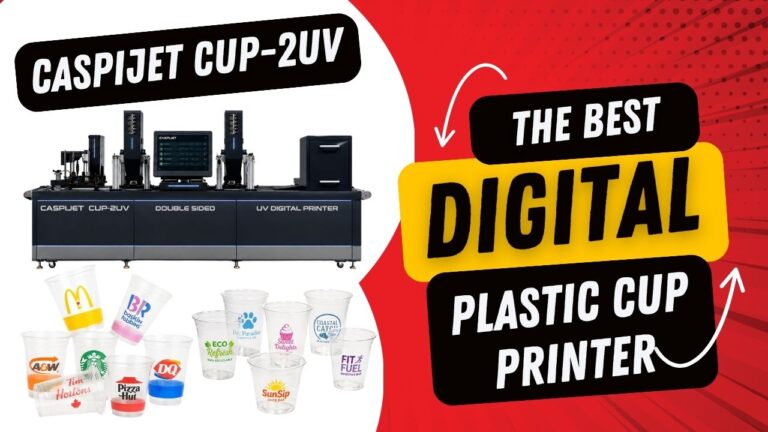
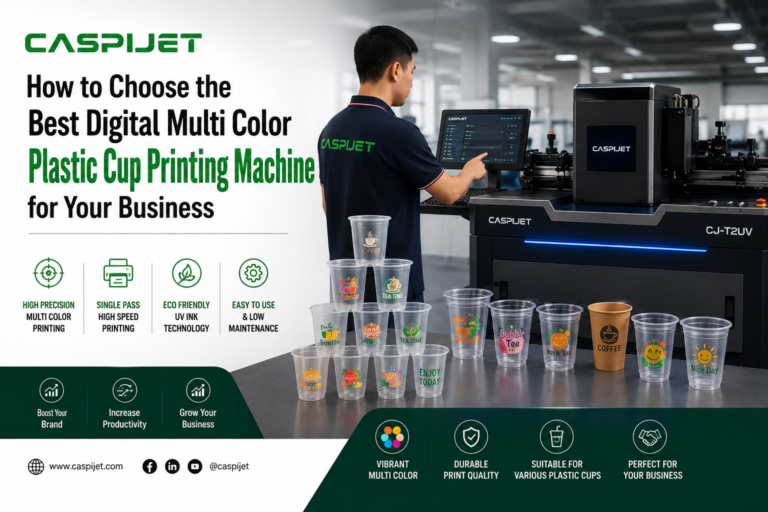
- Plastic films and plastic cups
- Paper cups and labels
- Napkins and other packaging substrates
The feeding system controls the position and movement of the material as it enters the printing area.
2. Printhead Array
The heart of a single pass printer is its printhead array. Instead of moving across the substrate like a traditional digital printer, the printheads are positioned across the required printing width.
As the material moves through the machine, thousands of ink droplets are precisely deposited onto its surface. Modern systems, such as those developed by Caspijet, incorporate advanced nozzle technology and protective architectures that shield critical components from dust accumulation and mechanical damage, extending printhead life by up to 40% compared to conventional systems.
Different printhead technologies may be used depending on the machine configuration, with industrial piezoelectric inkjet printheads being the industry standard.
3. Ink Delivery System
The ink supply system delivers ink continuously to the printheads. Industrial single pass printers can use different ink technologies depending on the substrate and application.
Common options include:
- Water-based pigment ink
- Water-based dye ink
- UV ink
- Application-specific digital inks
The correct ink selection is extremely important because adhesion, drying, color reproduction, durability, and regulatory requirements depend heavily on the substrate and final application.
4. Digital RIP and Printing Software
Artwork is processed through the printer’s software or RIP system. Instead of manufacturing printing plates, the digital file is sent directly to the printing system—this is one of the biggest differences between digital printing and conventional plate-based printing.
A customer can potentially change artwork, text, logos, images, variable data, batch information, and product versions without manufacturing a new plate. This plate-free printing technology eliminates costly plate-making processes, reduces lead times, and supports true zero MOQ (minimum order quantity) customization.
5. Drying or Curing
After the ink is deposited, it must be dried or cured depending on the ink technology.
Water-based systems generally use drying systems to remove moisture from the printed substrate. UV printing systems use UV curing to solidify the ink. This allows the finished material to continue through the production process.
Single Pass vs. Multi-Pass Digital Printing
One of the most common questions when purchasing a digital printing machine is the difference between single pass and multi-pass printing.
| Feature | Single Pass Printer | Multi-Pass Printer |
|---|---|---|
| Printhead movement | Usually stationary | Moves across substrate |
| Printing process | One pass | Multiple passes |
| Production speed | Very high | Generally lower |
| Industrial production | Excellent | Suitable for lower volumes |
| Variable data | Yes | Yes |
| Printing plates | Not required | Not required |
| Setup changes | Very fast | Very fast |
| Equipment cost | Generally higher | Generally lower |
| Best suited for | High-volume production | Short/medium production |
The biggest advantage of single pass printing technology is productivity. However, single pass machines generally require more sophisticated printhead arrays, electronics, material handling, and ink management systems. Therefore, the initial investment can be higher than a conventional digital printer.
Why Are Businesses Switching to Digital Single Pass Printing?
The biggest reason is simple: production speed combined with digital flexibility.
Traditional printing technologies can be extremely efficient for long production runs, but they often require plates, cylinders, setup, and longer preparation times.
Digital single pass printing removes many of these steps. For businesses producing customized packaging or frequent short runs, this can significantly simplify production.
High-Speed Production
Single pass inkjet printers can operate at industrial production speeds. Depending on the printer configuration, substrate, and print resolution, production speeds can range from moderate speeds to tens or even hundreds of meters per minute.
The actual achievable speed depends on resolution, print quality, ink type, substrate, print coverage, number of colors, drying capacity, and feeding system. Buyers should always evaluate the real production speed at the required print quality, rather than relying only on the maximum speed stated in a specification sheet.
No Printing Plates
One of the biggest benefits of digital printing is that it does not require conventional printing plates. Traditional flexographic printing may require new plates when artwork changes.
With a digital single pass printer, the artwork can be changed digitally. This is particularly useful for short production runs, multiple SKUs, seasonal packaging, personalized packaging, variable designs, promotional campaigns, and test marketing.
Lower Setup Time
Traditional printing can require significant preparation before production begins. Digital printing can reduce this preparation.
A typical workflow can be:
Design → RIP → Print
Instead of:
Design → Plate production → Plate installation → Ink setup → Registration → Test printing → Production
This makes digital printing particularly attractive for businesses that frequently change designs.
Multi-Job Merging Capability
Advanced single pass systems enable simultaneous processing of multiple orders, maximizing production efficiency and minimizing downtime. This is a significant advantage for contract packaging companies and converters handling diverse customer orders.
Short-Run Digital Printing
Single pass digital printing is especially interesting for short and medium production runs. For example, a packaging manufacturer may receive 500 pieces of one design, 1,000 pieces of another design, and 2,000 pieces of another design.
With conventional printing, frequent changes can increase setup costs. Digital printing allows these jobs to be produced with minimal physical setup changes, creating opportunities for businesses to offer short-run packaging printing that may not be economical with traditional printing methods.
Variable Data and Personalized Packaging
Digital printing also allows businesses to change the artwork between products. This makes single pass digital printing suitable for personalized packaging, promotional campaigns, QR codes, barcodes, batch information, product identification, and limited editions.
Digital Single Pass Printers for Packaging
Packaging is one of the most important applications for industrial digital printing. Depending on the printer configuration, single pass technology can be used for various packaging applications, all of which Caspijet supports with its extensive manufacturing experience.
Paper Bags
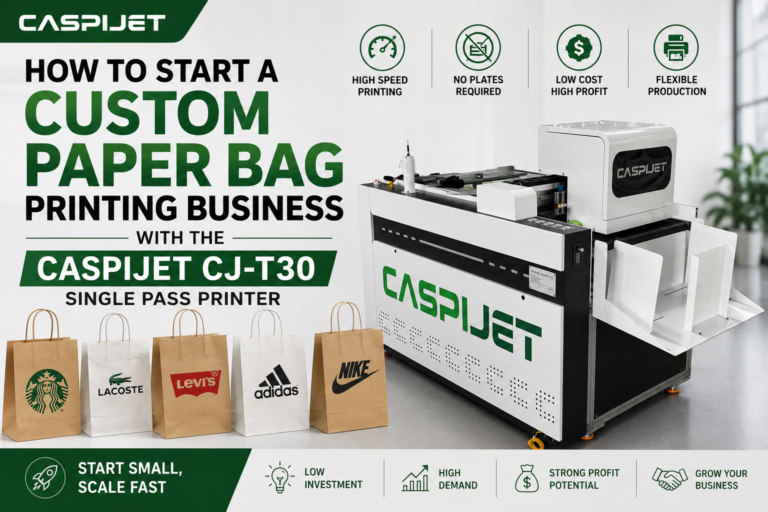
Digital printing can be used for logos, graphics, branding, and promotional designs on paper bags. This is particularly useful for businesses producing customized bags in smaller quantities. Caspijet’s digital single pass printers, such as the CJ-T600 and CJ-T800 models, are optimized for high-quality printing on paper bag materials using water-based inks and color management workflow software.
Corrugated Boxes
Single pass digital printers can print directly onto corrugated sheets or suitable corrugated materials. Applications include shipping boxes, e-commerce packaging, retail packaging, promotional boxes, pizza boxes, and product packaging.
Non-Woven Bags
Water-based digital printing systems can be configured for certain non-woven materials. Applications include reusable shopping bags and promotional bags.
Paper Cups
Specialized digital printing machines can print on paper cup blanks or directly onto suitable cup surfaces depending on the machine design.
Plastic Packaging
UV digital single pass printers can be used for certain plastic packaging applications where appropriate ink adhesion and surface treatment are available.
Water-Based vs. UV Single Pass Printers
Not every single pass printer uses the same ink. The two major categories relevant to packaging are water-based digital printing and UV digital printing.
Water-Based Single Pass Printers
Water-based systems are commonly used for suitable porous or absorbent materials. Examples include paper, kraft paper, corrugated cardboard, paper bags, and certain non-woven materials.
Advantages include suitability for many paper applications, low odor compared with some solvent-based technologies, good integration into packaging workflows, and availability of pigment-based systems for durable prints. However, substrate compatibility and drying requirements must be evaluated carefully.
UV Single Pass Printers
UV printers use UV-curable ink that is cured using UV light after deposition. UV printing can be suitable for a wider range of rigid and non-porous substrates, depending on the specific ink and surface treatment.
Applications can include plastic, glass, metal, ceramic, coated materials, and certain synthetic substrates. UV printing is particularly useful when strong surface adhesion and immediate curing are required.
What Materials Can a Digital Single Pass Printer Print On?
There is no universal material list for every single pass printer. The correct answer depends on the printer, ink, printhead, drying or curing system, surface treatment, and material.
Common applications include:
| Material | Typical Technology |
|---|---|
| Kraft paper | Water-based |
| Paper bags | Water-based |
| Corrugated cardboard | Water-based |
| Paper | Water-based |
| Non-woven | Water-based / UV depending on substrate |
| Plastic | UV |
| PP, PE, PET, PVC | UV |
| Glass, Ceramic, Metal | UV |
Caspijet’s single pass printers are designed for versatile material compatibility, delivering crisp, durable prints on diverse substrates including non-woven bags, bubble bags, flexible packaging, and more.
Before purchasing a machine, it is always recommended to perform an actual sample printing test using the customer’s material.
How Much Does a Digital Single Pass Printer Cost?
The price of a digital single pass printer varies significantly. There is no single standard price because machines differ considerably in print width, printhead technology, number of printheads, resolution, ink system, drying system, feeding system, automation, printing speed, software, and material compatibility.
A compact digital single pass printer may cost tens of thousands of dollars, while large industrial systems can cost substantially more. The correct way to compare machines is therefore not simply to compare the purchase price.
Buyers should calculate the total cost of ownership (TCO), considering:
- Machine price
- Ink cost
- Printhead cost
- Maintenance
- Electricity
- Spare parts
- Labor
- Downtime
- Feeding automation
- Drying/curing
- Expected production volume
A cheaper printer is not necessarily the cheaper production solution.
How to Calculate Single Pass Printing Cost
For packaging manufacturers, one of the most important measurements is the actual printing cost per square meter or per finished product.
A basic calculation can include:
Ink Cost = Ink Consumption × Ink Price
For example, if a printer consumes 5 ml of ink per square meter and ink costs $40 per liter:
5 ml × $0.04/ml = $0.20 per m²
However, actual ink consumption depends heavily on image coverage. A light logo and a full-color photographic image will not consume the same amount of ink. Therefore, buyers should request an actual ink consumption test using their artwork.
What Should You Look for When Buying a Digital Single Pass Printer?
Choosing the right machine requires more than looking at the maximum speed. Here are the most important factors.
1. Printhead Technology
Printheads are one of the most important components of an industrial inkjet printer. Ask:
- What printhead is used?
- Is it genuine?
- What is its expected lifetime?
- Is it readily available?
- What is the replacement cost?
- Is the printhead suitable for the required ink?
Look for protective architectures that shield critical components from dust accumulation and mechanical damage, as this can extend printhead life significantly.
2. Real Production Speed
Do not evaluate speed based only on the manufacturer’s headline specification. Ask the supplier to demonstrate using your material, your artwork, your required resolution, and your required color configuration. This provides a much more realistic production figure.
3. Ink Consumption
Ink can become one of the largest operating costs. Ask for actual consumption data based on your expected coverage.
4. Printing Width
The printing width should match your production requirements. Buying a printer with insufficient width can limit future applications. At the same time, unnecessarily large printing width can increase the investment.
5. Feeding System
Material handling is extremely important for high-speed printing. A high-speed print engine is only useful if the feeding system can reliably deliver material at the required speed. Look at automatic feeding, registration, alignment, material handling, stacking, reject systems, and production automation.
Advanced feeding mechanisms help prevent jamming, minimizing manual intervention and enhancing overall machine efficiency.
6. Ink Adhesion
A beautiful print is useless if it scratches or peels from the substrate. For plastic, glass, metal, and other non-porous materials, ask about surface treatment, plasma treatment, primer, ink adhesion, scratch resistance, and water resistance. Always test the finished product under actual customer conditions.
Digital Single Pass Printer Maintenance
Industrial digital printers still require maintenance. A proper maintenance program can include printhead cleaning, ink system inspection, nozzle checks, ink circulation monitoring, cleaning stations, filters, capping systems, software checks, calibration, and mechanical inspection.
Ink circulation and appropriate ink management are particularly important for maintaining stable print quality. High-quality machines with robust protective architectures can significantly reduce maintenance requirements and extend component life.
Is a Digital Single Pass Printer Better Than Traditional Printing?
There is no universal answer. It depends on the production requirements.
Digital single pass printing is particularly attractive when you need:
- Short production runs
- Fast design changes
- Variable data
- Multiple SKUs
- Personalized packaging
- No printing plates
- Fast turnaround
- High production speed
Traditional printing can still be highly competitive for very large volumes of standardized designs. The most appropriate technology depends on the customer’s production model.
Who Should Buy a Digital Single Pass Printer?
A digital single pass printer can be a good investment for:
- Packaging manufacturers
- Paper bag manufacturers
- Corrugated box manufacturers
- Printing companies
- Contract packaging companies
- Promotional product manufacturers
- Disposable packaging manufacturers
- Cup manufacturers
- Label producers
- E-commerce packaging suppliers
Businesses with frequent artwork changes and growing demand for short-run packaging can particularly benefit from digital printing.
Caspijet: A Factory Manufacturer with Global Reach
When choosing a digital single pass printing solution, partnering with an experienced manufacturer makes a significant difference. Shenzhen Caspijet Technology Co., Ltd. is a leading factory manufacturer with over 10 years of experience in industrial digital printing technology.
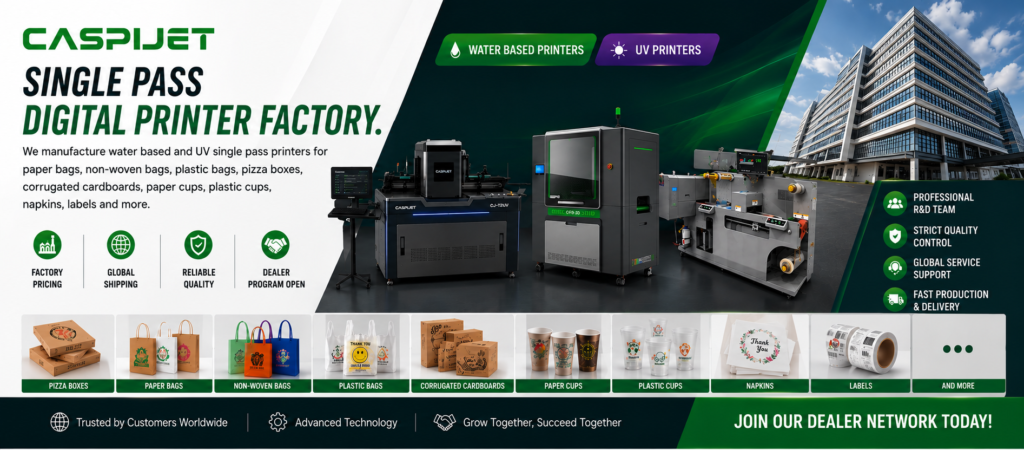
Caspijet’s printing machines are trusted by businesses in more than 50 countries worldwide, delivering reliable performance across diverse applications and production environments. The company’s product range includes water-based and UV single pass printing solutions designed for different substrates and production requirements.
Applications include:
- Paper bags
- Non-woven bags
- Plastic bags
- Pizza boxes
- Corrugated cardboard
- Corrugated boxes
- Paper cups
- Plastic cups
- Napkins
- Labels
- Other customized packaging applications
Caspijet’s approach is to match the printer configuration to the customer’s actual application rather than offering a one-size-fits-all machine. With a strong commitment to after-sales service, Caspijet provides comprehensive support including installation, training, maintenance, and technical assistance to ensure long-term production reliability.
For customers evaluating a new digital printing line, sample printing tests using the customer’s material and artwork can be arranged to demonstrate real-world performance.
Digital Single Pass Printing in 2026
The demand for flexible packaging production continues to create opportunities for digital printing. As brands launch more products, packaging designs change more frequently, and customers demand smaller production quantities, traditional long-run printing is not always the most efficient option.
Single pass digital printing combines:
Digital flexibility + industrial production speed.
This combination makes the technology increasingly attractive for packaging manufacturers looking to reduce setup time and expand their short-run production capabilities.
Final Thoughts
A digital single pass printer is an industrial digital printing machine designed to print an image while the substrate passes through the printing area once.
Its biggest advantages are:
- High production speed
- Digital workflow
- No conventional printing plates
- Fast artwork changes
- Short-run capability
- Variable data printing
- Multiple packaging applications
However, choosing the right machine requires careful evaluation of printheads, ink technology, substrate compatibility, print width, speed, feeding, drying or curing, and total operating costs.
The best digital single pass printer is not necessarily the machine with the highest advertised speed or the lowest purchase price. It is the machine that can reliably produce your required product at your required quality and production volume with an acceptable operating cost.
If you are considering a digital single pass printer for your production line, start with your actual material and artwork. A sample test is often the best way to determine whether a particular printer is suitable for your application.
Frequently Asked Questions
What is a digital single pass printer?
A digital single pass printer is an industrial digital inkjet printer that prints the required image while the substrate passes through the printer once. The printheads are generally arranged across the printing width rather than moving repeatedly across the material.
What is the difference between single pass and multi-pass printing?
Single pass printing completes the printing process during one pass of the material, while multi-pass printing normally requires multiple passes of a moving printhead carriage.
Is single pass printing faster?
Generally, yes. Single pass printers are specifically designed for high-speed industrial production. Actual speed depends on resolution, substrate, ink, print coverage, and machine configuration.
Can single pass printers print packaging?
Yes. Single pass digital printers are increasingly used for paper bags, corrugated packaging, boxes, cups, labels, and other packaging applications.
Can single pass printers print plastic?
Yes, but the printer and ink must be specifically suitable for the plastic substrate. UV digital printing is commonly used for many non-porous plastic applications.
Do single pass printers need printing plates?
No. Digital single pass printers do not require conventional printing plates.
How much does a digital single pass printer cost?
Prices vary significantly depending on print width, speed, printheads, ink technology, automation, and other specifications. A sample test and total-cost analysis are recommended before purchasing.
What is the best digital single pass printer?
There is no universally best machine. The right printer depends on the substrate, printing width, required speed, print quality, ink technology, production volume, and budget.
Why choose Caspijet for single pass printing?
Shenzhen Caspijet Technology Co., Ltd. is a factory manufacturer with over 10 years of experience in digital printing technology. Their machines operate in more than 50 countries and are backed by comprehensive after-sales service. Caspijet offers customized solutions for paper bags, non-woven bags, plastic packaging, corrugated boxes, cups, napkins, and label